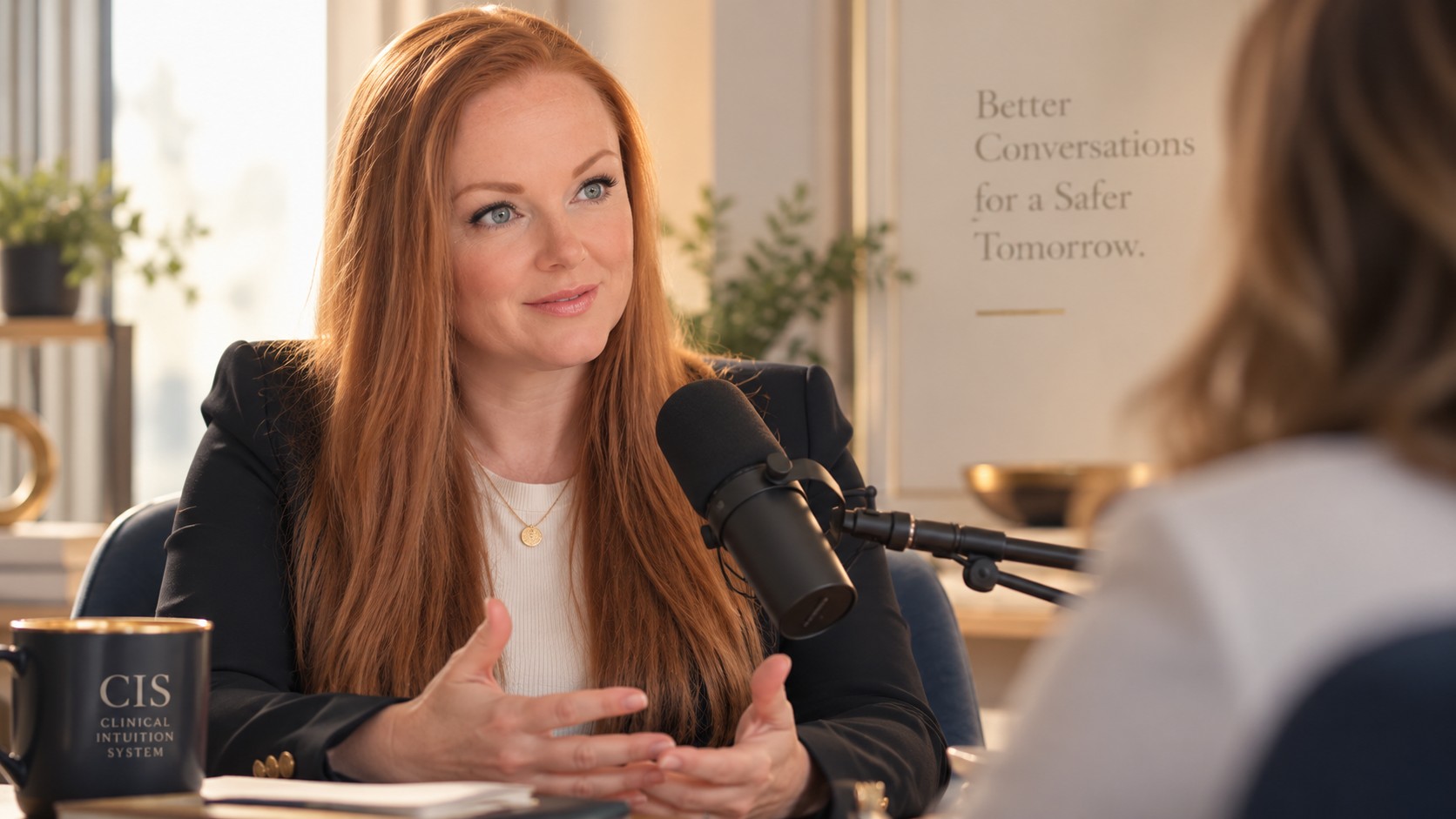
Where recognition becomes something we can see, discuss, practice, and strengthen.
Through keynotes, workshops, and strategic collaborations, Desireé Paige brings the thinking
behind CIS™ into rooms where clinicians, leaders, educators, and innovators are shaping what
happens next in healthcare.
Desireé Paige, BSN, RN·Founder, Clinical Intuition System™·Registered Nurse·U.S. Air Force Veteran
Desireé Paige on clinical intuition, recognition & the thinking behind CIS™
Clinical experience informing the work
14 Years Clinical Nursing·Emergency Care·ICU / CVICU·U.S. Air Force Veteran·Sigma Theta Tau International·Founder, CIS™
In the room
I don’t want clinicians to leave inspired by clinical intuition. I want them to see it differently.
I speak from the intersection of clinical experience, structured inquiry, and a question I have
carried for years: what are experienced clinicians actually noticing before everyone else can see it?
“I don’t want clinicians to simply trust their intuition. I want us to understand what
happens after the signal appears.”
That means examining what was noticed, what changed from baseline, what evidence supports the
concern, and how that recognition becomes communication and action.
Whether I’m speaking with clinicians, leaders, educators, or innovators, I want people to
leave with better questions about how clinical judgment develops — and what becomes possible
when we make more of that thinking visible.
Signature speaking topics
These are the questions I bring into the room.
The Power of Clinical Intuition
Why clinicians sometimes recognize change before the data fully explains it — and how
structured cognition can help turn that recognition into action.
What are experienced clinicians actually noticing before everyone else can see it?
TRM-4™ — Signal. Scan. Synthesis. Speak.
A structured approach to recognizing meaningful change, examining the clinical picture,
synthesizing what matters, and escalating concern.
What happens after the signal appears?
VOICE™ — Make the system see it.
A structured pathway for translating clinical concern into clear evidence, an actionable
request, and a shared plan.
How do we make what one clinician sees visible enough for the system to act?
CRISP™ — Reflect. Recalibrate. Strengthen.
Structured reflection that examines what was noticed, what was missed, what proved meaningful,
and what should shape the next clinical judgment.
How does experience become better judgment the next time?
Recognition, Respect & Retention
An organizational session on what recognition asks of a culture, and what it costs when that
culture does not answer.
What happens when clinicians repeatedly notice, speak, and discover that the system doesn’t hear them?
Collaboration
The next questions require more than one discipline.
AI & Technology
Exploring responsible ways technology may support recognition, communication, reflection, and the study of clinical cognition.
Research & Systems
Exploring how structured clinical cognition can be studied, measured, and integrated into real clinical environments.
Pilot & Evidence Partnerships
Partnering with healthcare organizations interested in evaluating CIS™ and contributing to its evidence-building phase.
Keynotes & Conferences
Keynotes that make clinical cognition visible, combining evidence, clinical experience, and frameworks audiences can keep examining after the room clears.
Workshops & Trainings
Interactive sessions that move CIS™ from concept to practice through recognition, communication, escalation, and reflection.
Advisory & Strategic Consulting
Working with leaders to examine how clinical recognition moves, or fails to move, through their existing structures and culture.
Built together, or not at all.
CIS™ was never meant to be built at a distance from clinical practice. Its next questions
require clinicians, leaders, educators, researchers, technologists, and healthcare organizations
willing to examine how clinical cognition actually moves through real systems.
If you’re asking those questions too, we should talk.
Let’s build what comes next.
Bring CIS™ into your room.
Keynote. Workshop. Pilot. Research collaboration. Start with the question you’re trying to solve.